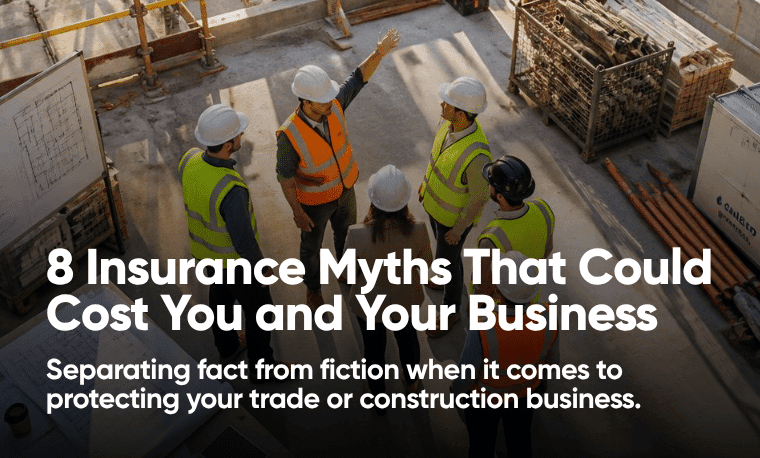
Running a trade or construction business comes with enough challenges as it is without navigating insurance misconceptions.
Whether you’re a sole trader, subcontractor or owner, building your insurance arrangements for your business or contracted work is essential to protecting your livelihood.
At IMAR, we regularly speak with tradies and SME owners and we’d like to share the eight common insurance myths that could leave your business exposed.
Myth 1: “Public Liability Insurance Covers Everything”
Public Liability Insurance (PLI) is one of the most important forms of protection for many trades and construction businesses, but it doesn’t cover every risk your business may face. PLI could protect tradies from legal fees or compensation costs if there was any personal injury or property damage to a client or member of the public while working onsite.
Depending on your business activities and insurance arrangements, it may be worth discussing other areas of cover with your broker.
- Tools and equipment
- Commercial vehicles
- Personal accident and illness
- Contractual obligations
- Other business risks
Many tradies assume Public Liability Insurance is a complete solution, when in reality it is often just one part of a broader insurance program. Coverage can vary depending on the policy, insurer, terms and conditions in place.
Myth 2: “My Business Is Too Small for Insurance”
One of the biggest misconceptions among small businesses is that insurance is only necessary once a business reaches a certain size. Unfortunately, claims don’t discriminate by how much revenue your business earns.
Sole traders and small business owners can face:
- Property damage claims
- Vehicle accidents
- Tool theft
- Injuries preventing them from working
In many cases, a single incident could mean lost jobs, time and profit regardless of whether the business has one or fifty employees.
Myth 3: “I’m a Sole Trader, So I Don’t Need Business Insurance”
Many sole traders perform exactly the same work as larger businesses and face many of the same risks. While you may not need every type of business insurance available, going uninsured in areas relevant to your work could expose your business to significant financial, legal and operational risks.
Depending on the nature of your work, it may be worth considering cover options for:
- Tools Insurance
- Professional Indemnity Insurance
- Income Protection Insurance
- Commercial Motor Insurance
- Accident & Illness Insurance
Myth 4: “If My Tools Are Stolen, They’re Automatically Covered”
Many tradies assume that tools stolen from a locked ute, van or job site will automatically be covered because of their home or car insurance. Sometimes, that may not be the case. Your tools coverage can vary depending on:
- Where the tools were stored
- Security measures in place
- How the theft occurred
- The terms of the policy
Understanding these requirements, especially with your broker when building your cover, before you need to make a claim can help prevent unexpected surprises later.
Myth 5: “The Hire Company Is Responsible for Damaged or Stolen Equipment”
Every equipment hire agreement is different. Some suppliers provide optional protection against theft or damage, while others place responsibility on the hirer.
Before signing any hire agreement, it’s important to understand:
- Who is responsible for damage
- Who is responsible for theft
- Whether excesses apply
- What protections are already included
It’s safe to never assume responsibility sits solely with the hire provider.
Myth 6: “If a Subcontractor Causes Damage, Their Insurance Will Cover It”
For construction businesses and contractors, this can be a costly misunderstanding.
Even where a subcontractor performs the work, your business may still become involved in a claim. It’s not automatic because the subby’s policy might exclude specific types of damage, their insurance cover could be lapsed, or the damage limit might go above your subby’s cover.
How to reduce risk?
- Verify subcontractor insurance arrangements
- Request certificates of currency
- Understand contractual responsibilities
- Keep insurance records up to date
Myth 7: “Signing a Contract Makes Me Liable for Everything”
Liability is rarely that straightforward. Liability will depend on the circumstances of the claim, the terms of the contract and any applicable legal obligations. Plus, standard legal duties including building laws and safety rules could kick in.
Construction contracts can include:
- Indemnity clauses
- Insurance requirements
- Risk allocations
- Additional responsibilities
The terms of a contract may create obligations that would not otherwise exist. So before signing, it’s important to understand exactly the risks your business is agreeing to.
Myth 8: “My Insurance Doesn’t Need Updating as My Business Grows”
A policy that suited your business two years ago may not adequately reflect your operations today. As your business evolves, your risks change as you buy new tools and equipment, hire more employees, or have more service offerings, your insurance arrangements should evolve with it.
Speak with an IMAR Broker
Insurance isn’t just about having a policy in place. It’s about ensuring your cover reflects how your business operates today and helps protect the business you’ve worked hard to build.
If you’re unsure whether your current insurance arrangements are still right for your business, call 13 IMAR (13 46 27) or submit an inquiry to connect with our team today.